
Website Design: What Makes Users Stay
Users form opinions about a website within seconds. Design is not just about aesthetics; it is about behavior. The way a site looks, feels, and functions determines whether a visitor stays, explores, and converts, or leaves without a second thought. Understanding the relationship between design choices and user engagement is critical to building websites that actually work.
While many factors influence user behavior, visual appeal and usability play a major role in whether someone stays or leaves. Think about the last time you visited a new website. Within seconds, you likely decided if it was worth exploring more. This makes above-the-fold design especially important; it should immediately communicate purpose and value.
“In the attention economy, anyone trying to connect with an audience must treat the user's time as the ultimate resource.” (Jakob Nielsen)
Layout
An effective layout directs attention without sacrificing visual appeal. Designers often rely on scanning patterns like the F-pattern, which reflects how users naturally skim content. Structuring content around these habits creates a more intuitive flow and improves engagement.
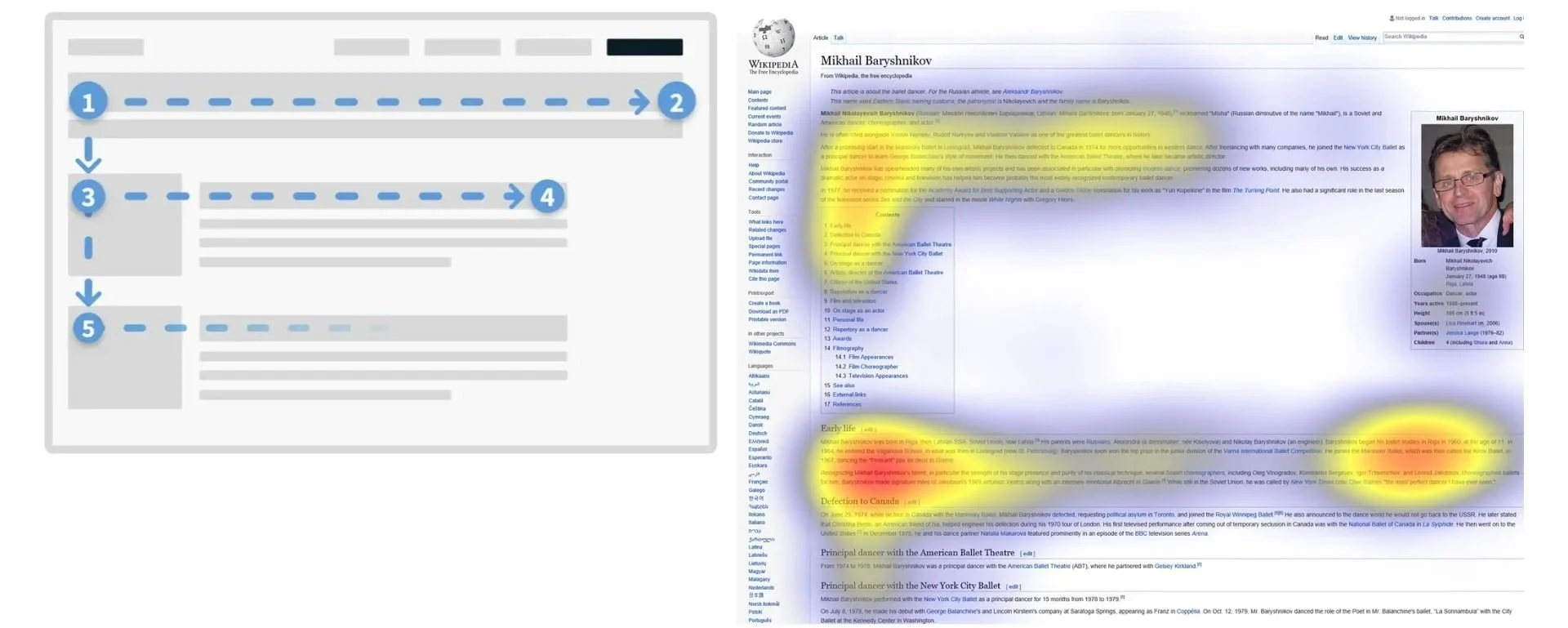
F-pattern | Source: Mohamed Amasha & Nielsen Norman Group
White space is just as important. Lenovo explains that it can reduce cognitive load and help users focus on key elements. Best practices include maintaining a logical content flow, top to bottom and left to right, and using clear sections to organize information. In a crowded interface, nothing stands out. This forces users to work harder and increases frustration. Simplicity is not just about minimalism. It is about clarity and usability.
Navigation
Navigation is often overlooked, but it can make or break a user experience. Users need to find what they are looking for quickly and effortlessly. Good navigation should feel almost invisible, but still intuitive and predictable.
Best practices include:
Keeping menus simple and easy to understand
Limiting options to avoid overwhelming users
Using familiar terms and clear wording
Maintaining consistency across pages
Research from HubSpot shows that 76% of users say the most important factor in website design is ease of use. That means intuitive navigation is not optional—it’s foundational.
Visual Hierarchy & Storytelling
Visual design still plays a crucial role in creating an engaging website. Visual hierarchy determines what users notice first and how their attention flows across the page. Headlines should stand out, calls to action should be clear, and content should guide users naturally.
Hierarchy is created through:
Size (larger elements attract attention first)
Color (high contrast signals importance)
Position (top and center draw focus)
Typography (includes font weight, spacing, and style)
Beyond structure, storytelling enhances the experience. Strong visuals such as high-quality images, videos, and graphics can make content more engaging and memorable. Designers and marketers like TurnOne Studio and Gilmedia also recommend adding testimonials, reviews, and infographics to help communicate complex information more effectively and build trust. When done well, storytelling creates a more immersive experience that captures and holds attention.
Final Takeaway
Good website design does not rely solely on aesthetics. Layout guides attention, navigation supports usability, and visual elements enhance engagement. When these work together, users stay longer, engage more, and are more likely to convert. The best user experiences feel effortless.
“Content precedes design. Design in the absence of content is not design, it's decoration.” (Jeffrey Zeldman)
What keeps users:
Clear value proposition above the fold
Consistent branding
Professional, modern visuals
What drives users away:
Overwhelming clutter
Intrusive popups or auto-play media
Poor mobile responsiveness
Inconsistent design patterns

Hi, I’m Allison!
I am a graphic and interactive designer, ready to craft strategy-driven and engaging designs for you now!