
Why Brands Are Becoming More Human Online
In a digital space crowded with ads and polished messaging, highly corporate content is easy to ignore. To stand out, brands are shifting their approach online, communicating less like companies and more like people.
This move towards humanizing brand presence reflects a broader change in audience expectations. People want connection, not just promotion. More than ever, customers are responding to personality, honesty, interaction, and accountability in ways traditional marketing often cannot compare.
Brands have higher trust than any other institution, with 80% trusting the brands they use. Consumers are looking to brands for education, inspiration, and a sense of community. (2025 EdelmanTrust Barometer)
The Rise of Brand Humanization
Social media has completely transformed how communication works. It is fast, accessible, and often informal. Brands that rely on rigid, scripted messaging can feel distant, while those that embrace a more human tone tend to resonate more with users.
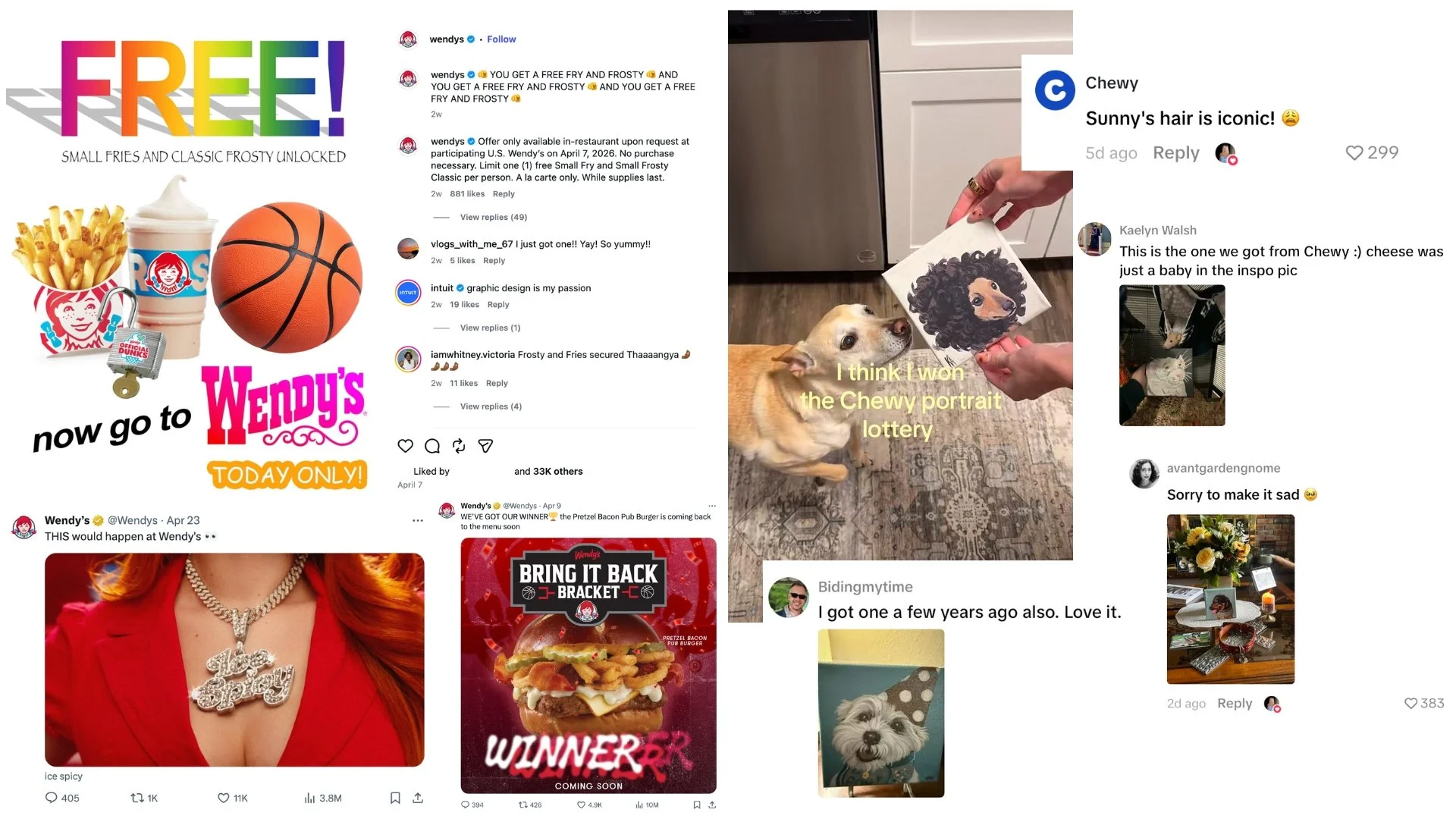
A strong and classic example is Wendy’s, known for its bold, humorous, sassy voice online. The spontaneous interactions and funny posts have become a defining part of the brand’s identity. In contrast, Chewy takes a more emotional approach, emphasizing care and compassion. For several years, the brand has given personalized pet portraits to “random” customers. Some are sent for lighthearted reasons, such as Earth Day-themed names, while others are more sentimental, like a pet’s passing.
How Brands Are Doing It
Humanizing a brand is about creating experience, communicating values, and evoking emotion. While strategies vary depending on the audience and platform, several common approaches stand out:
Developing a Distinct Voice
A recognizable voice builds familiarity and trust. Brands must tailor to their audience and platform while maintaining consistency.
Storytelling Over Selling
People and experiences have become the true focus. Rather than centering only on products, brands are building campaigns around real stories. Dove, for example, creates emotionally driven narratives that extend into bigger social conversations.
Engaging In Conversations
Brands are no longer just posting. They are replying, reacting, and participating. Thoughtful customer interactions reinforce that real people are behind the brand.
Social-First Campaigns
Campaigns today are designed for interaction as much as visibility. Whether through TikTok trends, viral posts on X, or Instagram hashtags, the goal is participation and shared experience.
Why Audiences Are Responding
At its core, brand humanization is rooted in psychology. People are wired for connection, and social interaction is a fundamental human need. As a result, audiences are increasingly skeptical and avoid overly curated or artificial content.
Genuine, imperfect communication feels more trustworthy. Relatability plays a major role in driving engagement. When people feel understood and see themselves reflected in a brand’s humor, experiences, or values, they are more likely to interact. Emotional connection also fosters loyalty. Customers are buying into stories, identities, and communities, and a humanized brand creates a sense of belonging.
“Humanizing brands in the Digital Age is becoming a very profitable business. … [T]he more digital we become, the more we need the human touch and human interaction.” (Andy Stalman)
The Strategic Advantage
Social media platforms reward engagement, and personality-driven content often performs better. Humanizing a brand is a strategic decision that strengthens performance and builds long-term relationships. However, authenticity is critical. Audiences can quickly recognize when a brand is forcing reliability or chasing trends—consistency and honesty matter.
The brands that succeed on social media are those that feel real. By embracing personality, telling meaningful stories, and engaging directly with their audience, they move beyond transaction and create memorable experiences. In an environment where attention is limited and trust is fragile, being human is a competitive advantage.

Hi, I’m Allison!
I am a graphic and interactive designer, ready to craft strategy-driven and engaging designs for you now!